FEATURED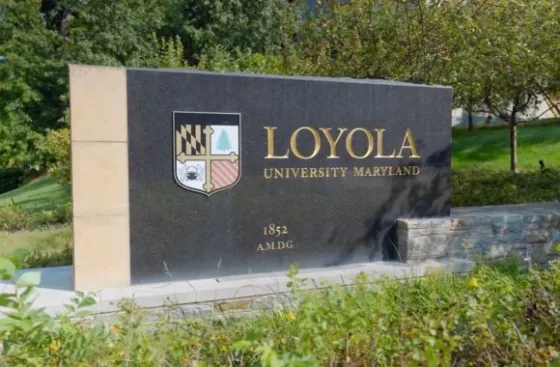
Key Takeaways
- Loyola University Maryland's English department asserts that literary canons support 'white supremacy' and is considering renaming the department while committing to anti-racist education.
- The department plans to hire a professor of African American literature and diversify its curriculum to include more authors of color while focusing on the role of 'whiteness' in literary studies.
- Critics, including Emory University professor Mark Bauerlein, argue that this ideological approach marginalizes the discipline and could undermine important literary works.
Loyola University Maryland’s Department of English recently announced its commitment to “anti-racism,” claiming literature promotes “white supremacy.”
“Literature and the literary canons have been used to validate white supremacy,” the department’s website states.
As a result, the department will “reflect on what it means to be called an ‘English Department’ given the discipline’s roots in imperialism and Eurocentrism,” and “will consider renaming,” according to the website.
The website also states that its faculty play a role “in creating inclusive spaces at the university and in actively challenging any form of white supremacy.”
The department affirms that “black lives matter,” “racism is based in white supremacy,” and “confronting racism requires that we actively facilitate conversations about it in the classroom.”
Moreover, the English department made a promise to “acknowledge the centrality of whiteness in the history and evolution of literary canons.”
As a result, the department said it will immediately hire a professor of African American literature and include more authors of color in their curriculum. It will examine all classes and commit to “making anti-racist teaching central in each one.”
What’s more, the department promises to “avoid centering the experiences of white students” in the classroom by “interrogating the presumed invisibility of whiteness in the classroom and the concept of the ‘universal reader’ as always being white and male.”
In 1852, Jesuits founded Loyola University Maryland to provide students a Catholic liberal arts curriculum in recognition of the works of St. Ignatius of Loyola.
The school’s English department sees that Jesuit mission as a “commitment to serving an urban, majority-Black city with a history of racial injustice.”
The Fix reached out to Loyola University Maryland’s media relations office and the English department for comment, but did not receive any reply.
In response to the school’s claims, Emory University English professor Mark Bauerlein told The College Fix that the discipline of English is on a concerning trajectory.
“The position of the Loyola department gives neat evidence for why English has become such a marginal discipline,” Bauerlein said.
“How many 19-year-olds want to spend a semester in a class with teachers who are such scolds?” he said.
The Fix asked Professor Bauerlein what he thought of Loyola’s claim that “whiteness” is central to literary canons.
“As for the substance of this claim, well, of course, English is a white-dominated discipline. The facts of literary history demand it,” he said.
Professor Bauerlein also said, “if the third-rate profs have their way, Shakespeare, Milton, Wordsworth, Emerson, and Eliot will step back so that inferior works by people of the favored identity are included. This is a losing tactic.”
Similarly, Defending Education spokesperson Reagan Dugan told The Fix that Loyola’s claim that “literary canons have been used to validate white supremacy” is outlandish.
This “is a sign of a fundamental issue in many humanities departments across higher education,” Dugan said.
“Instead of encouraging students to meaningfully engage with authors at their best and their worst, these departments warp everything through the lens of race and sex to fit their priors,” he said.
Asked if Defending Education’s investigations have found other similar commitments to anti-racism, Dugan said, “English departments across the country in 2020 and 2021 (and even in the past year) published similar statements.”
He said the education watchdog group is committed to “making sure these divisive claims are not lost in the shuffle.”
MORE: ‘Spiritual hunger’: Pitt student ministry draws 600 to worship, baptism